
What a QR code scan actually tells you, and what it does not
Learn exactly what data is captured during a QR code scan, including device type and location, and what personal information is never collected.
What data is captured during a scan
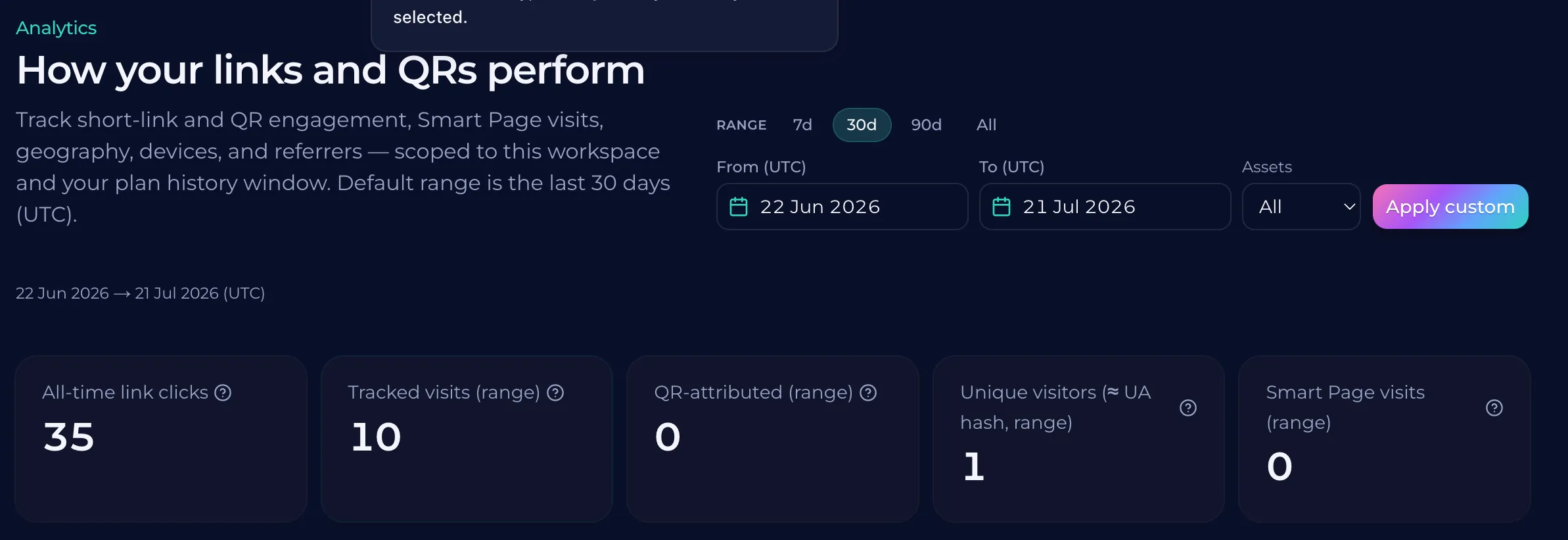
A QR code scan records specific technical details about the interaction. It captures the time of the scan, the device type, and a rough location. These data points help you see when your audience is engaging with your content and from what hardware they are accessing it. When a user scans a code, the system logs the device's operating system and browser. This information helps you understand if your audience prefers mobile devices or desktops. It also tracks the general geographic area of the scan, providing a sense sense of where your physical marketing materials are working best. These metrics are collected without identifying the individual user. The system does not record personal information like names, email addresses, or IP addresses. The data is aggregated to show you the volume of interest and the user behavior patterns rather than individual identities.
The difference between anonymous and personal data
A scan does not identify a person. It records a device type, a rough location, and the time of the scan. This data is anonymous because it does not link to a name, email, or phone number. When you see a report, you see a count of interactions. You see that a specific flyer or sign was popular at a certain time. This distinction is important for your marketing. You can see that a location is successful, and you can adjust your strategy based on that information. You do not need to collect personal data to understand how your audience interacts with your physical materials.
How location data is recorded
A QR code scan records a rough location, such as a city or region. It does not track a specific street address or a precise GPS coordinate. This distinction is enough to keep the data anonymous while still showing you where your physical marketing materials are working. Your dashboard shows the general area of the scan. This helps you see if a local event or a report in a local newspaper is driving traffic. You can see if a scan happened in London or in New York, but you cannot see the exact house or shop where the scan occurred.
Why tracking data helps your marketing
A printed QR code acts as a bridge between the physical and digital worlds. Without scan data, a flyer or a sign is a black box. You cannot tell if people are actually looking at it or if the placement is working. Tracking data turns these physical touchpoints into measurable actions. You can see exactly when scans happen and on what devices. This information helps you decide where to spend your budget and which locations are getting the most attention. Instead of guessing, you can use the data to refine your strategy. If one location shows high engagement and another shows none, you can move your resources to what works. You can see the patterns of engagement and adjust your tactics based on evidence rather than intuition.
Privacy and compliance considerations
Collecting data from QR scans is a common practice, but it must be done with care. You need to know the difference between anonymous data and personal data. Personal data includes names, email addresses, or phone numbers. Anonymous data, like device types and rough locations, does not identify an individual person. Your marketing team can use these metrics to see where a campaign is working. Because the data is anonymous, it helps you stay within common privacy standards. You are tracking the performance of a campaign, not the identity of the user. QURL records device type, rough location, and time of scan. It does not record who the person is. This distinction is vital for your compliance team. It allows you to track your marketing efforts without collecting personal information.
Common questions
- Does a QR code scan reveal who the person is?
- It records technical data like the time of scan, the device type, and a rough location, but it does not capture personal information or identity.
- Is the location of a scan recorded?
- A QR code scan records the approximate location of the user, such as a city or region, rather than a precise GPS coordinate. This data helps you identify which physical locations or marketing materials are performing best without identifying the individual user.
- What device information is captured?
- A QR code scan records the device type, such as a mobile phone or tablet, and the approximate location of the scan. It does not identify the individual user or collect personal information.
- Can a QR code scan be used to track a person's identity?
- A QR code scan does not identify a person.
Keep reading
- How to Prove Marketing ROI to a ClientLearn how to provide defensible data for offline marketing and track the specific impact of physical assets like flyers, posters, and signage.
- QR Codes and UTM Parameters: How They Work TogetherLearn how QR codes bridge the gap between physical and digital marketing while UTM parameters provide specific tracking data for every click.
- How to A/B Test Printed Flyers with Two QR CodesLearn how to split a print run and use two different QR codes to compare offer types or landing pages. This guide covers testing methodology, sample sizes, and data analysis.